

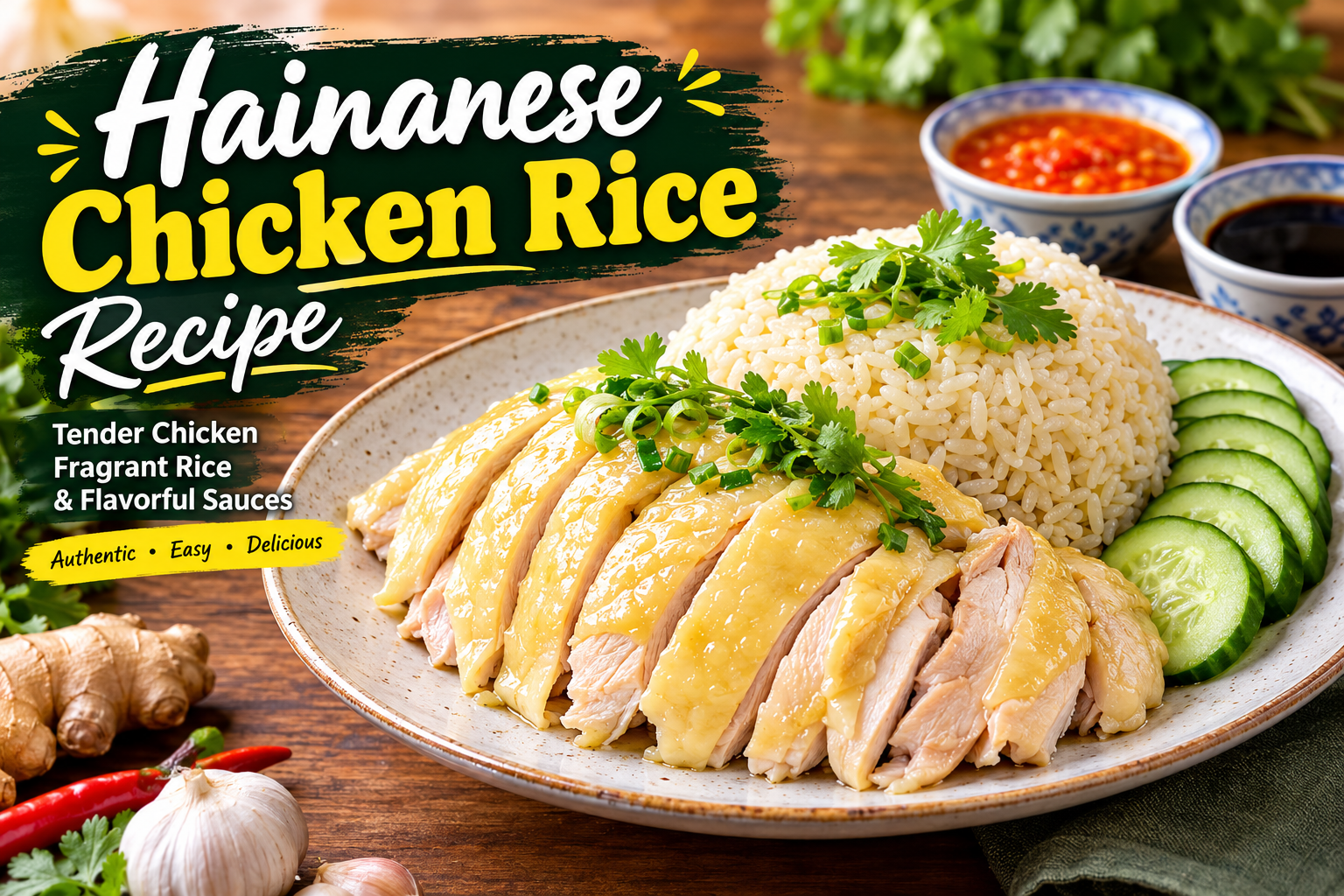
If you love flavorful rice dishes and tender chicken, this Hainanese chicken rice recipe is a must-try. This classic dish is famous for its silky chicken, aromatic rice, fresh cucumber slices, and delicious dipping sauces. Although the ingredients are simple, the combination creates a satisfying meal that tastes like something you would order at a restaurant.
Hainanese chicken rice is closely associated with Singaporean cuisine and has roots in the cooking traditions of Hainan, China. It is also popular throughout Malaysia and other parts of Southeast Asia. Its signature flavor comes from gently poaching the chicken and cooking the rice with chicken broth, ginger, garlic, and chicken fat or cooking oil.
The best part is that you do not need special equipment or professional cooking skills to make this dish at home. With the right ingredients and a few simple techniques, you can prepare tender chicken, fluffy rice, and homemade sauces that bring everything together.
In this guide, you will learn how to make Hainanese chicken rice step by step, how to keep the chicken juicy, and how to avoid common cooking mistakes.
What Is Hainanese Chicken Rice?
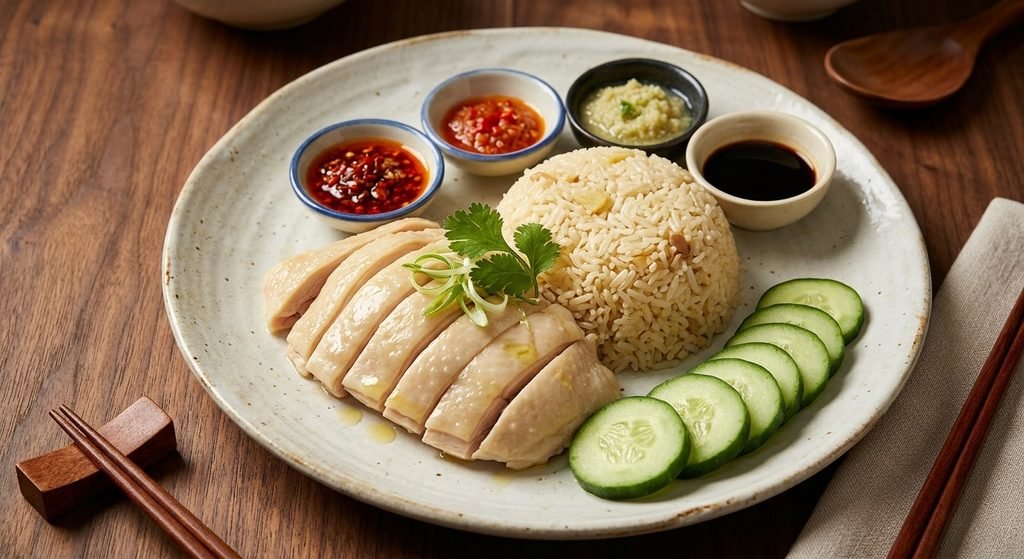
Hainanese chicken rice is a traditional Southeast Asian dish featuring poached chicken served with rice cooked in flavorful chicken stock. It is commonly accompanied by sliced cucumbers, chili sauce, ginger sauce, and sometimes a light soy-based sauce.
Unlike fried chicken and rice dishes, this recipe focuses on gentle cooking and aromatic ingredients. The chicken remains tender, while the rice absorbs the rich flavor of the broth Chinese Fried Chicken Recipe.
There are several regional variations. Some versions use chicken with smooth, pale skin, while others feature darker soy-based sauces or slightly different seasoning combinations. This recipe follows a home-friendly approach inspired by the classic Singapore-style preparation.
Why You Will Love This Hainanese Chicken Rice Recipe
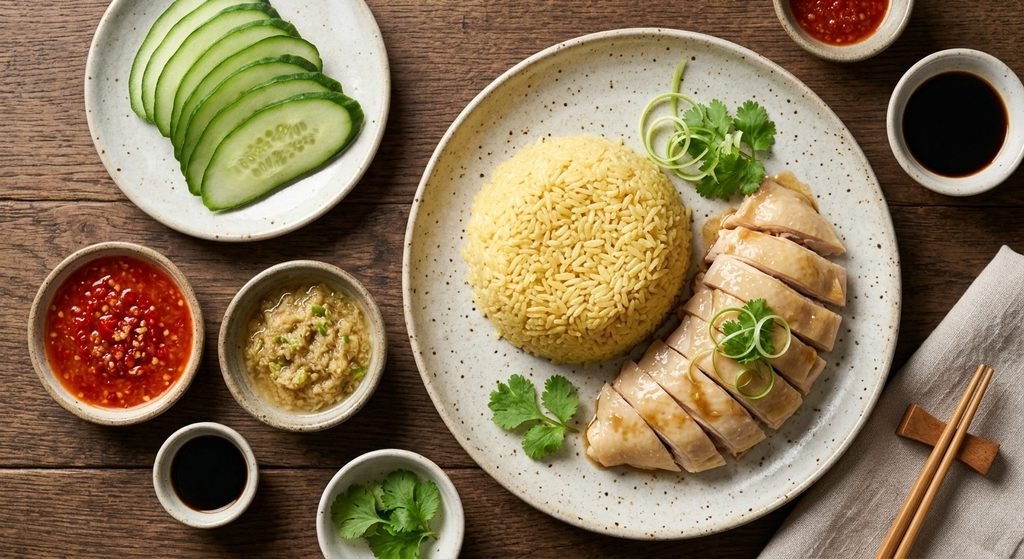
- Tender, juicy chicken: Gentle poaching helps prevent dry meat.
- Fragrant rice: Ginger, garlic, and chicken broth give the rice its signature aroma.
- Fresh homemade sauces: Chili and ginger sauces add brightness and heat.
- Simple ingredients: Most items are available at regular American grocery stores.
- A complete meal: Chicken, rice, cucumber, and sauces make a balanced and satisfying plate.
- Great for meal preparation: Leftover chicken and rice can be stored separately for convenient meals.
Preparation and Cooking Time
- Prep time: 20 minutes
- Cooking time: 45–60 minutes, depending on the chicken
- Total time: Approximately 1 hour to 1 hour 20 minutes
- Servings: 4 people
The exact cooking time depends on the size of the chicken and your cooking equipment. Always check that the chicken reaches a safe internal temperature.
Ingredients for Hainanese Chicken Rice
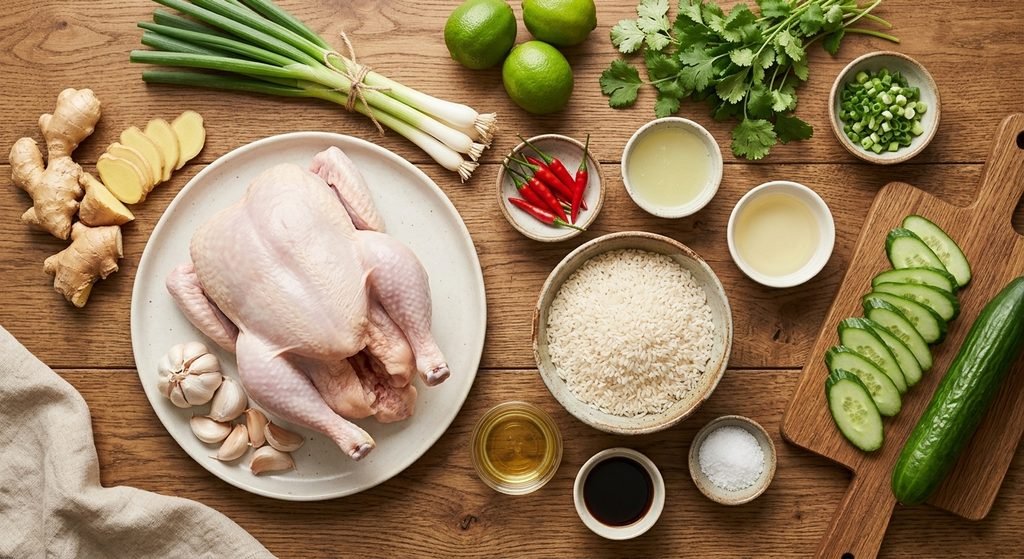
Use fresh ingredients for the best flavor. The following quantities make approximately four servings.
For the Chicken
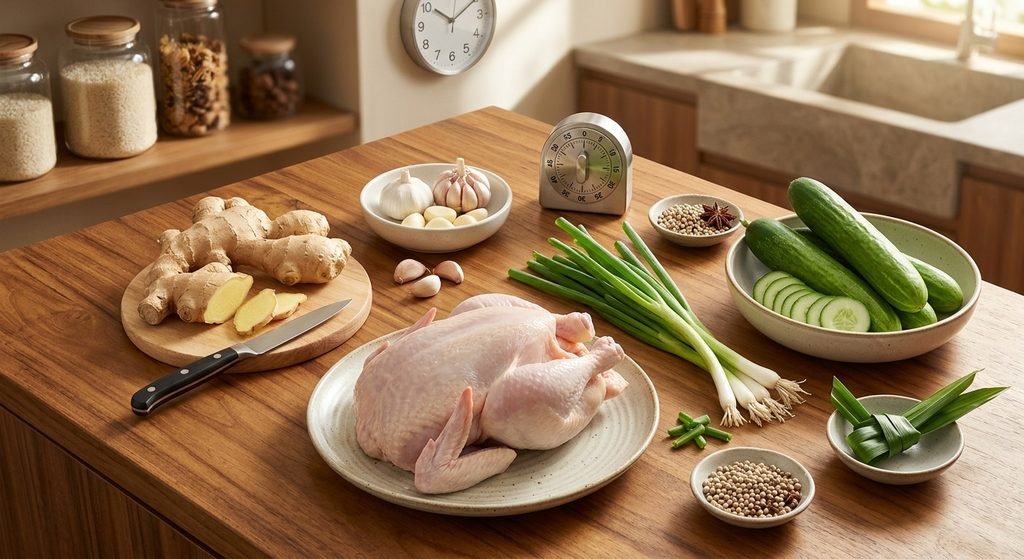
- 1 whole chicken, approximately 3–3½ pounds (1.4–1.6 kg)
- 5–6 slices fresh ginger
- 4 garlic cloves, lightly crushed
- 3 green onions
- 1–2 teaspoons salt, adjusted to taste
- Water, enough to cover the chicken
For the Fragrant Rice
- 2 cups jasmine rice
- 2 tablespoons chicken fat or neutral cooking oil
- 3 garlic cloves, finely chopped
- 1 tablespoon grated or minced ginger
- 2½–3 cups chicken broth, adjusted for your rice and cooking method
- ½ teaspoon salt, or to taste
Important: The amount of liquid depends on the rice brand, whether the rice is rinsed and drained thoroughly, and your cooking method. Use the rice package’s usual liquid ratio as a starting point, replacing water with flavorful chicken broth.
For the Chili Sauce
- 4–6 red chilies, adjusted to your preferred heat
- 2 garlic cloves
- 1 tablespoon fresh ginger
- 2 tablespoons lime juice
- 2–4 tablespoons chicken broth
- ½ teaspoon sugar
- Salt to taste
For the Ginger Sauce
- 3 tablespoons freshly grated ginger
- 2 green onions, finely chopped
- 2 tablespoons neutral oil
- 1–2 tablespoons chicken broth
- A pinch of salt
For Serving
- 1 cucumber, thinly sliced
- 2 green onions, chopped
- Fresh cilantro, optional
- Light soy sauce, optional
- Additional chili sauce, if desired
How to Make Hainanese Chicken Rice Step by Step
Step 1: Prepare the Chicken
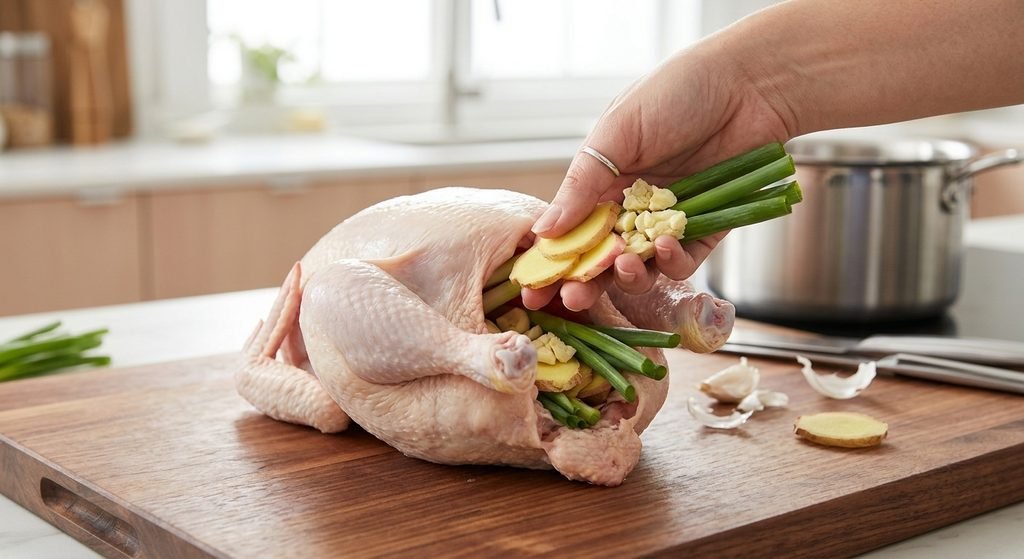
Remove any giblets from the chicken and pat it dry. Trim excess fat and reserve it if you want to render chicken fat for the rice.
Rub the chicken lightly with salt, including the cavity and skin. Allow it to rest for approximately 10 minutes while you prepare the aromatics.
Place the ginger slices, crushed garlic, and green onions inside the cavity. These ingredients infuse the chicken with a gentle fragrance as it cooks.
Choose a pot large enough to hold the chicken comfortably.
Step 2: Gently Poach the Chicken
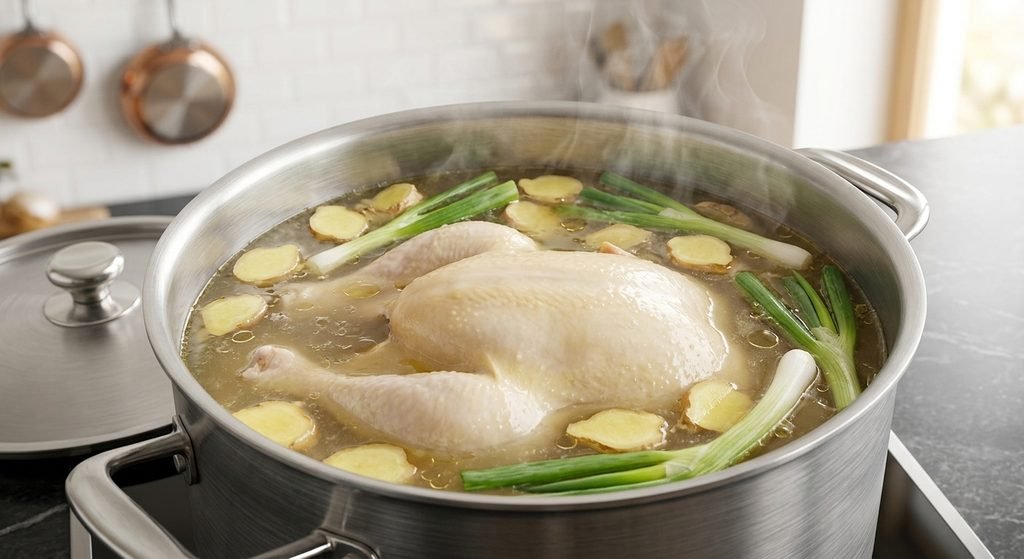
Add enough water to the pot to cover the chicken. Bring the water to a boil, then reduce the heat until it reaches a gentle simmer.
Carefully lower the chicken into the pot. Skim away any foam that rises to the surface.
Cook gently until the thickest part of the breast and the innermost part of the thigh reach at least 165°F (74°C), without the thermometer touching bone. Cooking time varies with the size of the bird, so use a food thermometer rather than relying on time alone.
Avoid keeping the water at a rolling boil. Aggressive boiling can make the meat tougher and cause the skin to tear.
Step 3: Rest and Cool the Chicken
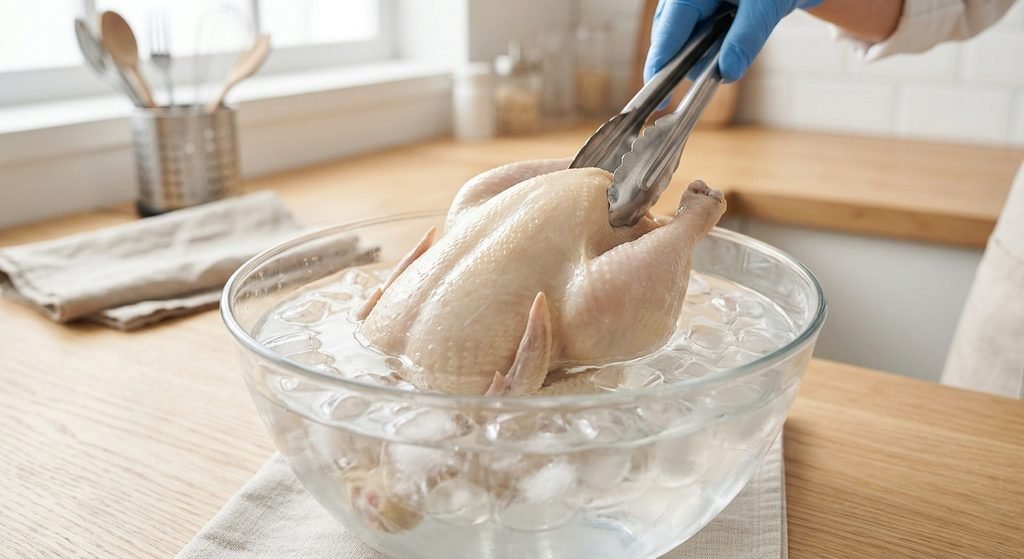
Once the chicken is cooked safely, remove it carefully from the pot.
For the classic silky-skin texture, some cooks briefly immerse the chicken in an ice-water bath. This can help stop the cooking process and firm the skin. Keep this step brief and handle the chicken hygienically.
Allow the chicken to rest before carving. Brush the skin lightly with a little sesame oil or neutral oil if desired.
Reserve the cooking liquid. This broth is one of the most important ingredients in the entire recipe.
Step 4: Wash the Rice
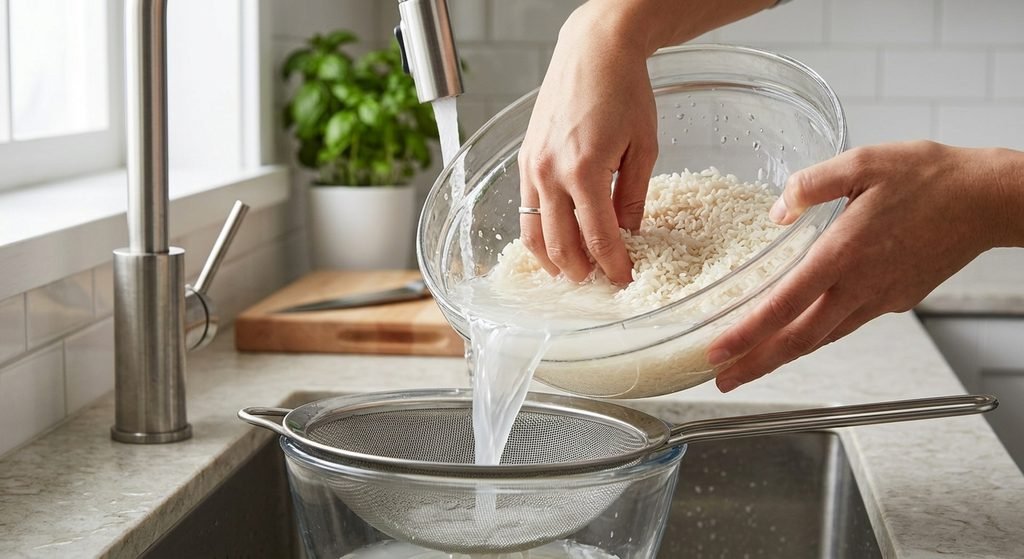
Place the jasmine rice in a bowl and cover it with water. Swirl the grains gently with your fingers, then drain the cloudy water.
Repeat until the water becomes noticeably clearer. Drain the rice thoroughly.
Rinsing removes excess surface starch, which helps the finished rice remain fluffy rather than sticky.
Step 5: Fry the Ginger and Garlic
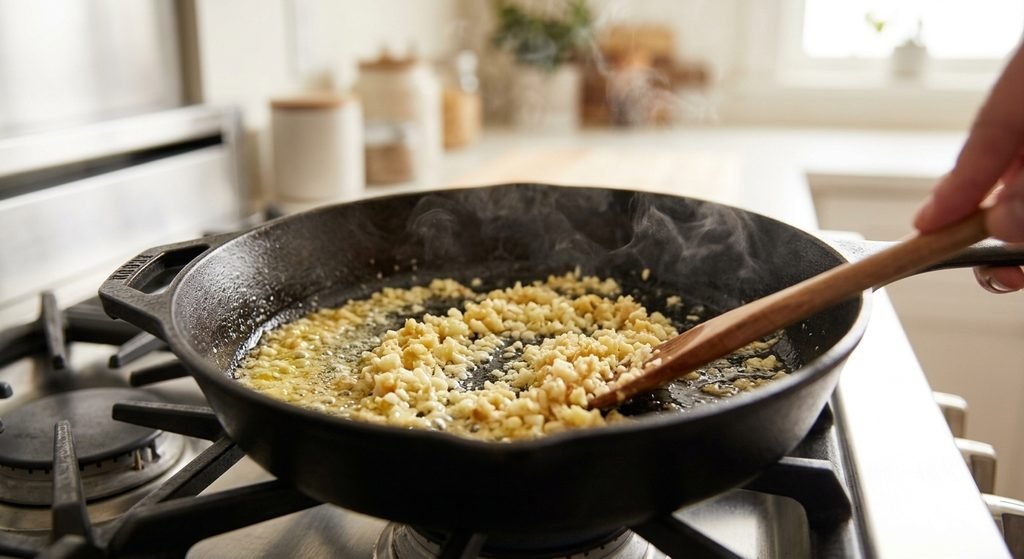
Heat the chicken fat or neutral oil in a saucepan over medium heat.
Add the minced garlic and ginger. Stir for approximately 30–60 seconds, until fragrant. Do not let the garlic turn dark brown, because burnt garlic can make the rice taste bitter.
If you do not have chicken fat, ordinary neutral cooking oil works well.
Step 6: Toast the Rice
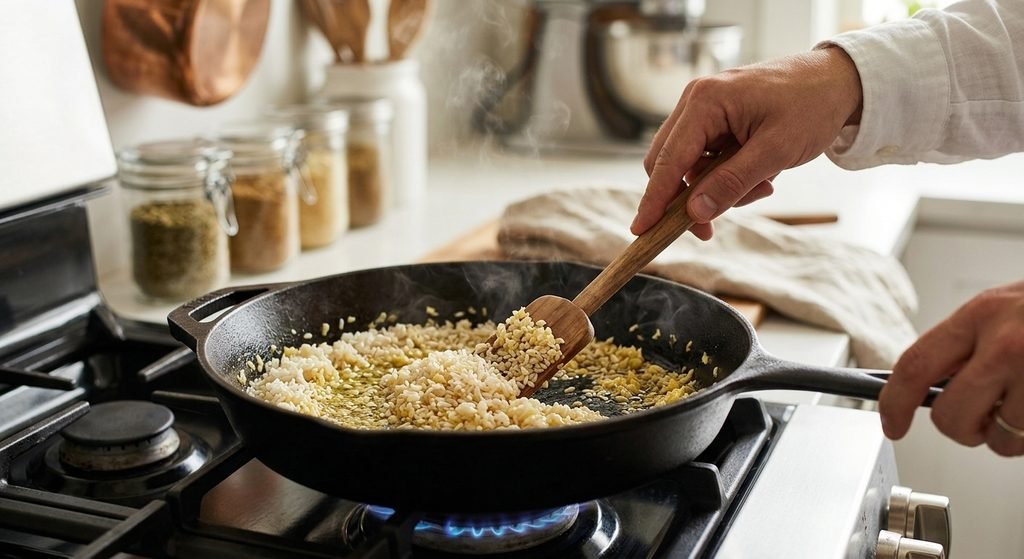
Add the rinsed rice to the saucepan. Stir gently for 1–2 minutes so the grains become coated with the aromatic oil.
This brief step helps distribute the ginger and garlic flavor throughout the rice.
Pour in the measured chicken broth and add salt. Stir once, then bring the liquid to a boil.
Reduce the heat, cover the pan, and cook according to your rice brand’s instructions, usually around 15–20 minutes for jasmine rice on the stovetop.
Avoid repeatedly lifting the lid, because escaping steam can interfere with even cooking.
Step 7: Let the Rice Rest
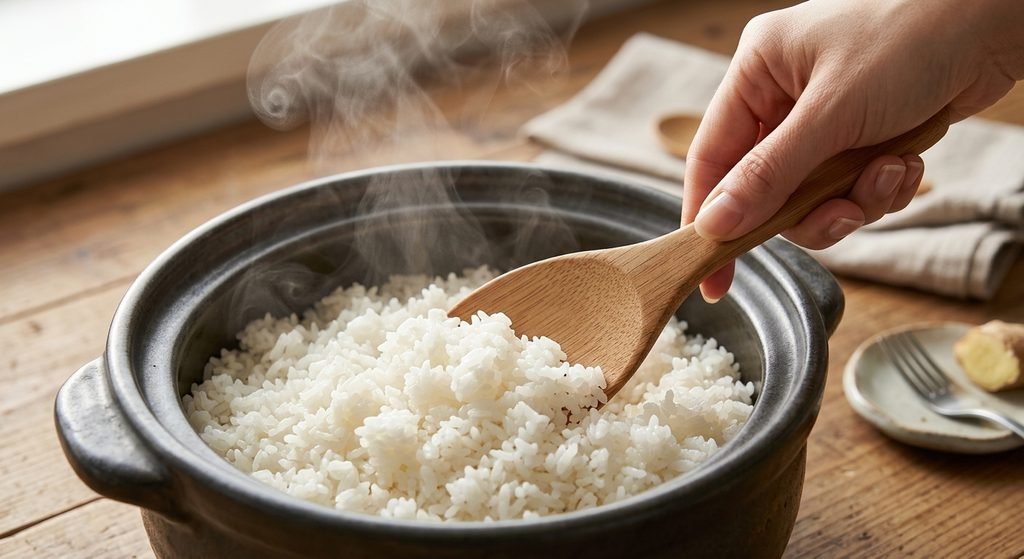
When the rice is tender and the liquid has been absorbed, turn off the heat.
Keep the lid on for another 5–10 minutes. This allows the moisture to distribute evenly and helps the grains finish steaming.
Fluff the rice gently with a fork or rice paddle before serving.
Step 8: Make the Chili Sauce
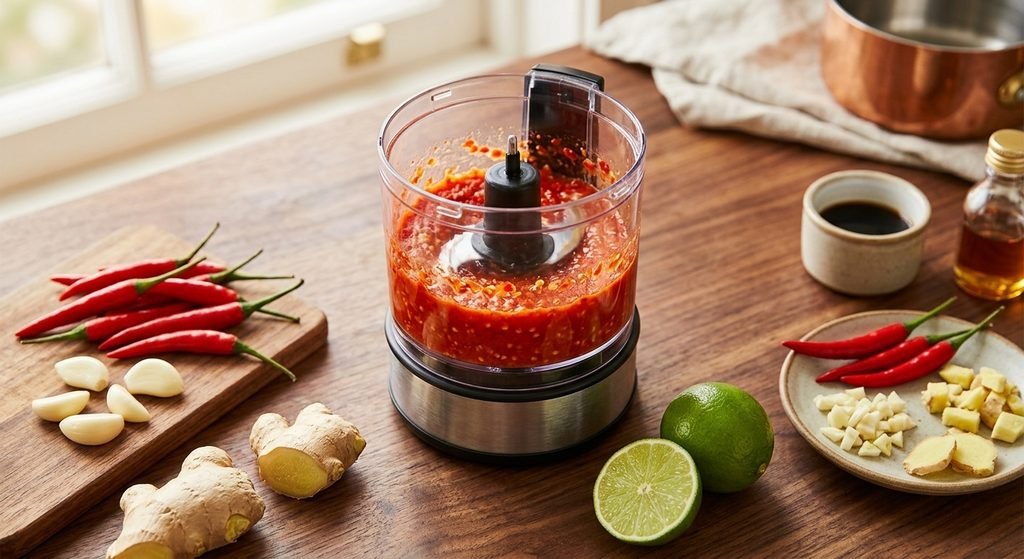
Add the chilies, garlic, ginger, lime juice, sugar, salt, and a little chicken broth to a blender or food processor.
Blend until the mixture reaches your preferred consistency. Add more broth if the sauce is too thick.
Taste and adjust the lime juice, salt, or sugar as needed. The sauce should be bright, slightly spicy, and balanced rather than overwhelmingly hot.
For a milder sauce, remove the chili seeds or use fewer chilies.
Step 9: Prepare the Ginger Sauce
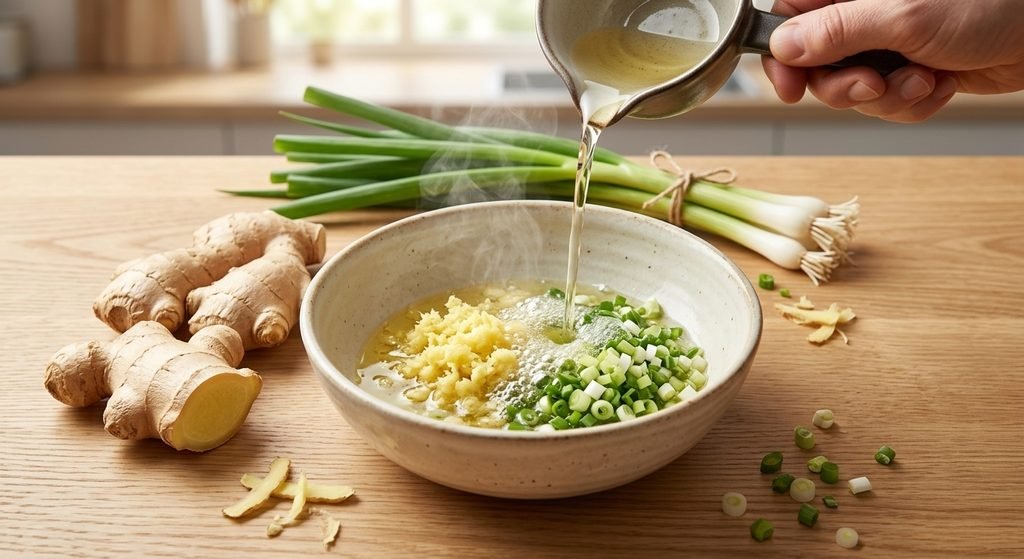
Place the grated ginger and chopped green onions in a heatproof bowl.
Heat the neutral oil until hot but not smoking. Carefully pour it over the ginger and green onions. The mixture should sizzle gently.
Stir in the chicken broth and a pinch of salt. Taste and adjust the seasoning.
This sauce provides a fresh, savory contrast to the rich chicken and aromatic rice.
Step 10: Carve and Serve
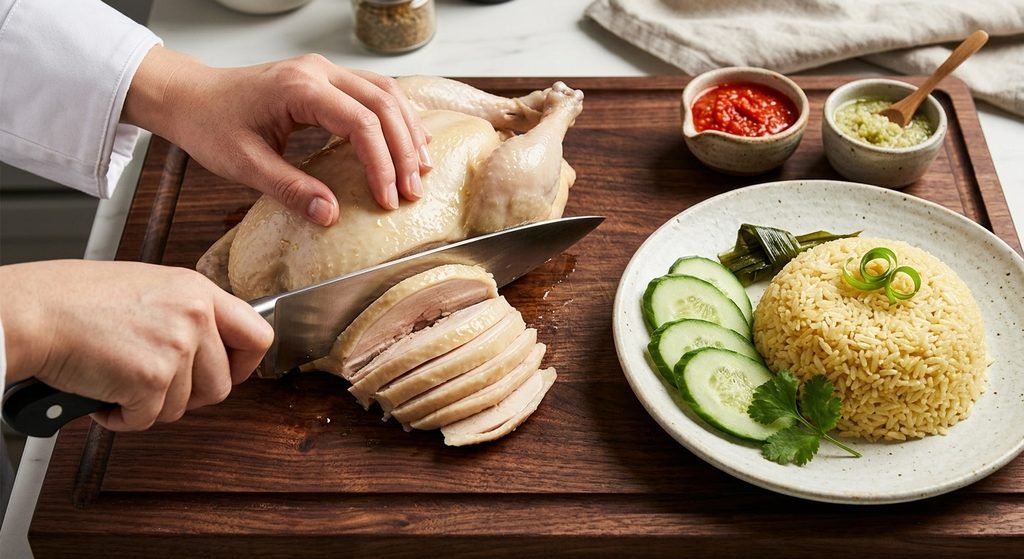
Carve the chicken into manageable pieces using a clean knife and cutting board.
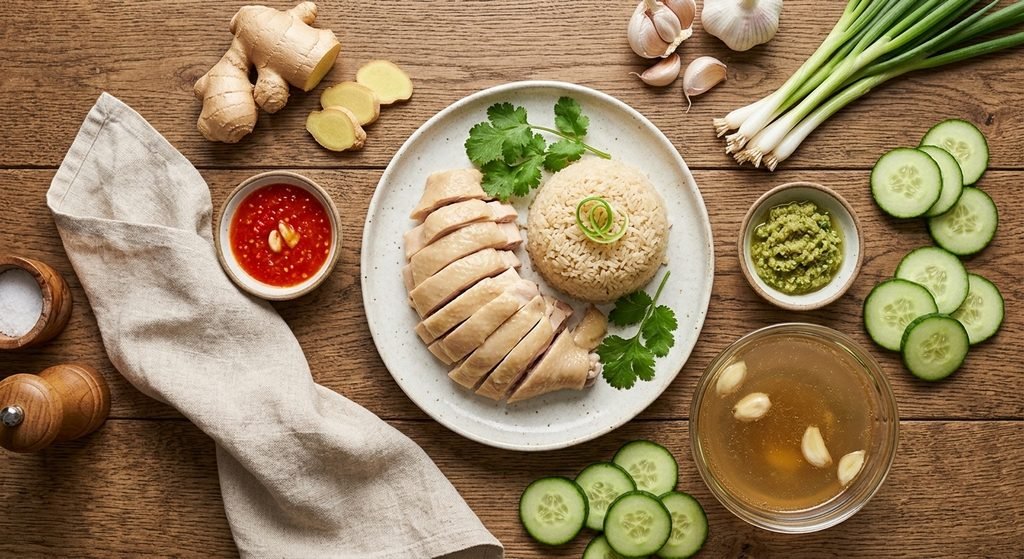
Spoon the fragrant rice onto serving plates. Arrange the chicken beside the rice, then add cucumber slices and fresh cilantro or green onions if desired.
Serve the chili sauce and ginger sauce in small bowls. Offer light soy sauce as an optional additional condiment.
For the most authentic experience, let everyone add their preferred amount of sauce to each bite.
Tips for the Best Hainanese Chicken Rice
1. Choose Good-Quality Chicken
A fresh, good-quality chicken provides better flavor and texture. A whole chicken is traditional, but bone-in chicken pieces can be used if you prefer a smaller batch.
2. Keep the Cooking Liquid at a Gentle Simmer
A gentle simmer is essential for tender chicken. Vigorous boiling can damage the skin and make the meat less delicate.
3. Do Not Throw Away the Broth
The poaching liquid contains flavor from the chicken, ginger, garlic, and green onions. Use it for the rice and sauces, and save any extra for soup.
4. Measure the Rice Liquid Carefully
Too much broth can produce mushy rice, while too little may leave the center of the grains undercooked. Follow your rice brand’s recommended ratio and adjust for your cooking method.
5. Balance the Sauces
The chili sauce should have a balance of heat, acidity, and seasoning. The ginger sauce should taste fresh and savory. Taste both before serving.
6. Allow the Rice to Rest
Resting the rice with the lid on helps it finish steaming and improves its texture.
7. Slice the Chicken Just Before Serving
Carve the chicken close to serving time to help preserve its moisture. If you prepare it ahead, store it safely and reheat it thoroughly when appropriate.
Common Mistakes to Avoid
Boiling the chicken too aggressively: This can make the meat tougher. Keep the liquid at a gentle simmer.
Using plain water for the rice: Water works, but flavorful chicken broth gives the dish much of its signature taste.
Adding too much liquid: Excess broth can turn jasmine rice mushy. Measure carefully.
Burning the garlic: Garlic cooks quickly. Keep it moving in the pan and lower the heat if necessary.
Skipping the sauces: The chicken and rice are delicious on their own, but the chili and ginger sauces provide much of the dish’s distinctive character.
Cutting the chicken immediately: Letting it rest briefly makes carving easier and helps retain moisture.
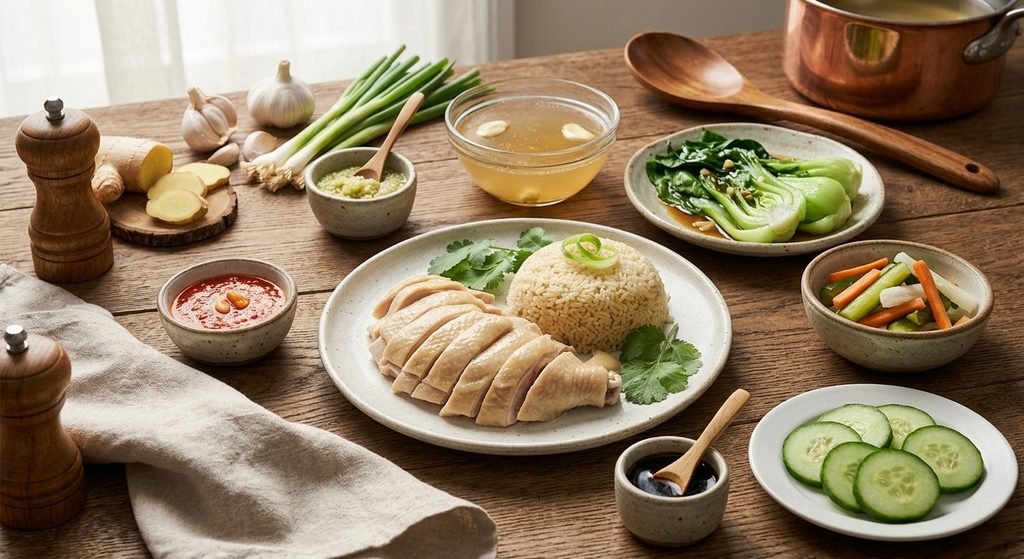
What to Serve with Hainanese Chicken Rice
Hainanese chicken rice is a complete meal, but you can add simple side dishes to create a larger spread.
- Cucumber slices: Provide a cool, refreshing contrast.
- Light chicken soup: Use some of the reserved broth, seasoned to taste.
- Steamed Asian greens: Bok choy or Chinese broccoli makes a good vegetable side.
- Pickled vegetables: Their acidity balances the savory rice.
- Extra chili and ginger sauces: Offer both so guests can customize each serving.
If you enjoy Chinese-style meals, you can also serve this dish alongside other rice and chicken recipes for a family-style dinner.
How to Store and Reheat Leftovers
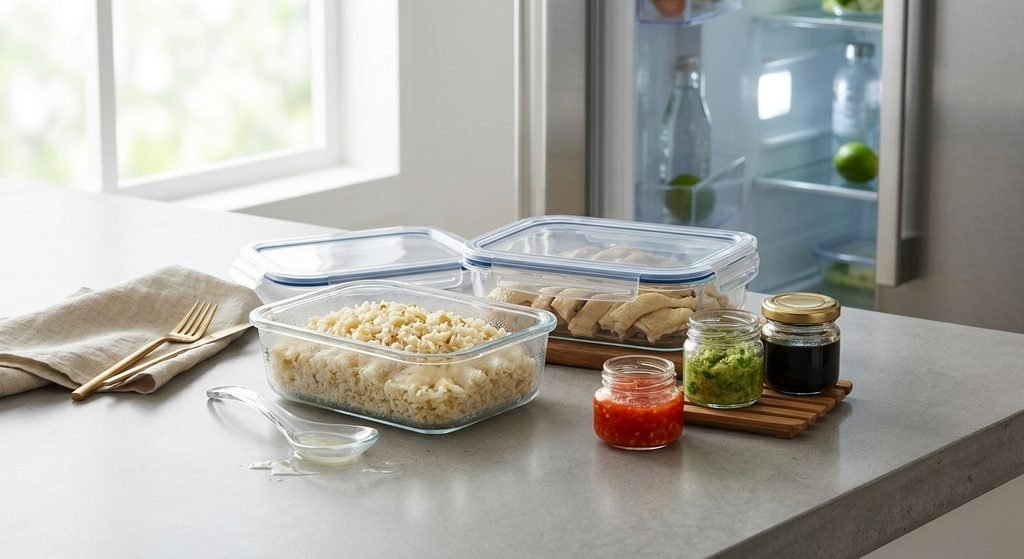
Cool and refrigerate the chicken and rice promptly in separate, shallow containers. Refrigerate within two hours of cooking, or within one hour when the surrounding temperature exceeds 90°F (32°C).
Keep the refrigerator at 40°F (4°C) or below. Properly stored cooked chicken and rice should generally be used within 3–4 days.
Reheat leftovers to an internal temperature of 165°F (74°C). Add a small splash of water or broth to the rice before reheating to help restore moisture.
You can freeze cooked chicken and rice in suitable airtight containers, although the rice texture may change slightly after thawing. For best quality, freeze promptly and thaw safely in the refrigerator.
Do not leave cooked rice at room temperature for extended periods, because certain bacteria can produce toxins that reheating may not eliminate.
Frequently Asked Questions
Is Hainanese chicken rice healthy?
It can be part of a balanced diet. Chicken provides protein, while rice supplies carbohydrates. The nutritional profile depends on the amount of chicken fat, oil, salt, skin, and sauce used. For a lighter version, use less oil, remove the chicken skin before eating, and add extra vegetables.
Can I make Hainanese chicken rice without a whole chicken?
Yes. Bone-in chicken thighs or drumsticks can work well. Adjust the cooking time to the size of the pieces and verify that they reach 165°F (74°C). The broth may have a slightly different flavor, but the recipe can still be delicious.
Can I use a rice cooker?
Yes. Sauté the ginger, garlic, and rice in a separate pan, then transfer the mixture to your rice cooker. Add the appropriate amount of chicken broth and cook according to the manufacturer’s instructions. Do not exceed the cooker’s maximum fill line.
What type of rice is best?
Jasmine rice is a practical choice for its fragrance and texture. Other long-grain rice varieties may work, but you may need to adjust the amount of liquid and cooking time.
Why is my chicken dry?
Chicken may become dry if it is overcooked or held at a high temperature for too long. Use a food thermometer, maintain a gentle simmer, and allow the chicken to rest before carving.
Is Hainanese chicken rice spicy?
The chicken and rice themselves are generally mild. Most of the heat comes from the chili sauce, which you can make milder or spicier according to your preference.
Can I prepare this recipe ahead of time?
Yes. You can prepare the sauces and slice the cucumber ahead of time. Cook the chicken and rice close to serving time for the best texture, or refrigerate cooked components promptly and reheat them safely.
What makes Hainanese chicken rice different from fried chicken and rice?
Hainanese chicken rice features gently poached chicken and rice cooked with aromatic broth. Fried chicken and rice dishes generally rely on a crispy coating, stir-frying, or stronger sauces. The cooking method gives Hainanese chicken rice its distinctive tender texture and delicate flavor USDA Food Safety and Inspection Service.
Conclusion
This Hainanese chicken rice recipe proves that simple ingredients can create an exceptional meal. Tender poached chicken, ginger-garlic rice, fresh cucumber, and homemade dipping sauces work together to produce a dish that is comforting, aromatic, and full of flavor.
The keys to success are gentle poaching, carefully measured rice liquid, fresh aromatics, and balanced sauces. Once you master these steps, you can adjust the seasoning and serving style to suit your family’s preferences.
Make this recipe for a weeknight dinner, a weekend family meal, or whenever you want to try a classic Southeast Asian favorite at home. Serve it fresh, offer both sauces, and enjoy every flavorful bite.
Ready to cook? Gather your ingredients, prepare your chicken broth, and start making homemade Hainanese chicken rice today!
